

If I want beach-cottage windows to look light but still work hard, I’d stick with six options: sheer linen drapes, macrame panels, woven wood shades, layered sheers over woven shades, textile valances with simple shades, and cafe curtains. The right pick comes down to 3 things: light control, privacy, and how well the material handles sun, humidity, and salt air. Choosing the best natural fibers is essential for durability in these conditions.
Here’s the short version:
- Sheer linen drapes work best when I want soft light and an open feel
- Macrame panels add texture but offer very little privacy
- Woven wood shades give me more control, especially with a liner
- Layered sheers over woven shades offer the most range from daytime glow to night coverage
- Textile valances with simple shades fit rooms that need a softer look without extra bulk
- Cafe curtains help in kitchens and baths where I want privacy on the lower part of the window
A few numbers stand out fast:
- Sheer linen often filters about 30%–50% of light
- Unlined woven wood shades may block only 10%–20%
- Add a privacy liner, and woven shades can reach about 60%
- A blackout liner can block almost all incoming light
That means not every window should get the same treatment. Living rooms and sunrooms usually do well with lighter fabrics. Bedrooms and street-facing rooms often need layered coverage. Bathrooms and kitchens need materials that are easier to clean and less likely to struggle in damp air.
Quick Comparison
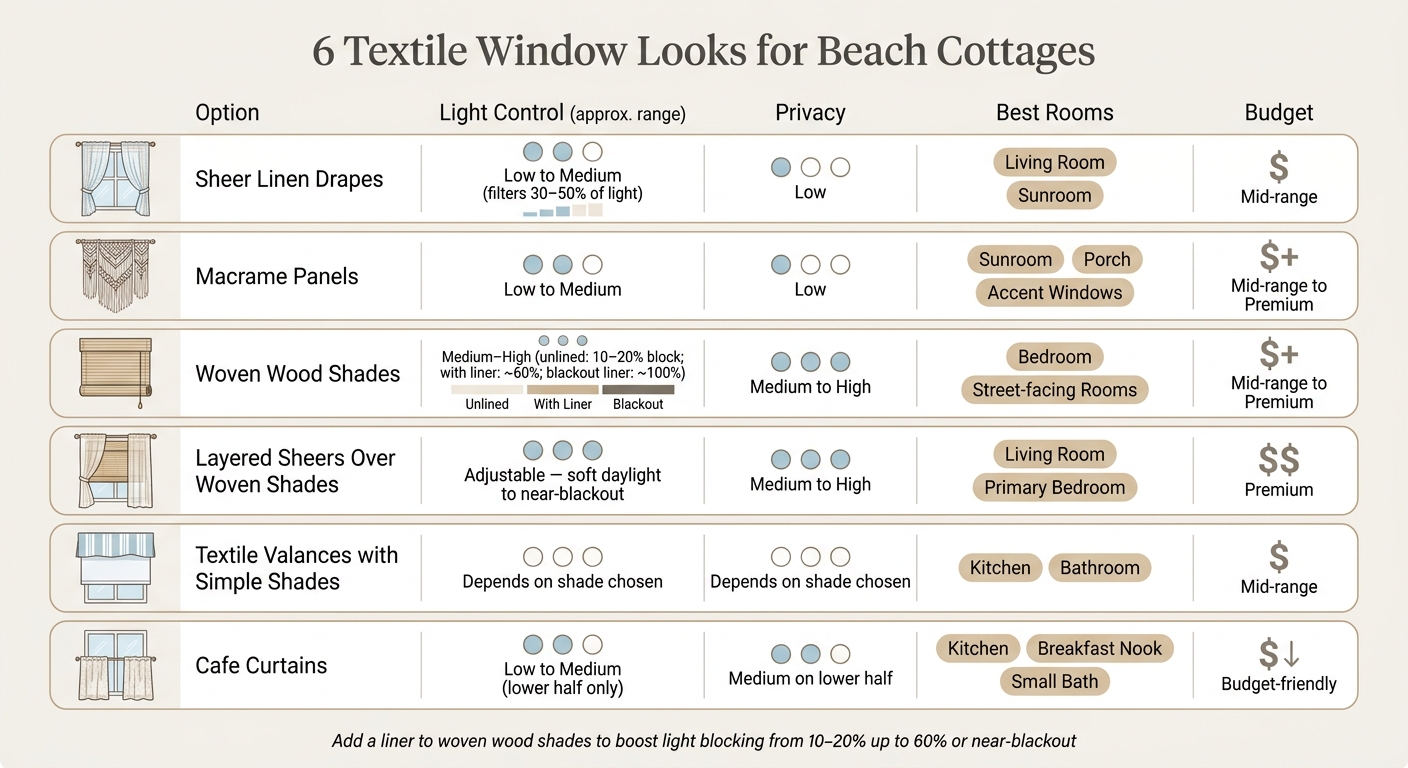
6 Textile Window Looks for Beach Cottages: Light, Privacy & Best Rooms
| Window look | Light control | Privacy | Best rooms | Main reason to use it |
|---|---|---|---|---|
| Sheer linen drapes | Low to medium | Low | Living room, sunroom | Soft daylight and airy style |
| Macrame panels | Low to medium | Low | Sunroom, porch, accent window | Texture and handmade look |
| Woven wood shades | Medium to high with liner | Medium to high | Bedroom, front-facing room | Better control and natural texture |
| Layered sheers over woven shades | Medium to near blackout | Medium to high | Living room, primary bedroom | Day-to-night flexibility |
| Textile valances with simple shades | Depends on shade | Depends on shade | Kitchen, bathroom | Soft finish with plain function |
| Cafe curtains | Low to medium | Medium on lower half | Kitchen, breakfast nook, small bath | Partial privacy without losing top light |
Bottom line: if I want the safest all-around setup for a beach cottage, I’d look first at layered treatments and easy-care fabrics. They keep the room bright during the day, help with privacy at night, and hold up better when the sun is strong and the air stays damp, especially if you know how to maintain them.
sbb-itb-bbd3158
What Makes a Textile Window Look Work in a Beach Cottage
The best coastal window treatments tend to share three things: they feel easy, not fussy; they look natural; and they can handle day-to-day life near the water.
Light fabrics and natural texture
Linen, cotton, bamboo, reeds, jute, and grasses all make sense in a beach cottage. They soften daylight and bring in texture without stealing attention from the room. Linen and cotton feel soft and are simple to live with, while woven wood shades add texture and help filter light.
Soft color and relaxed structure
Keep the palette quiet: whites, off-whites, sandy beiges, driftwood grays, and faded blue-grays. Those shades let the view do the heavy lifting. For shape, go with relaxed styles instead of stiff tailoring. Rod-pocket panels, grommet tops, ring-clip curtains, and softly folded Roman shades all fit well. Heavy swags and ornate hardware don’t.
Sun, privacy, and humidity needs
Sun exposure matters more than many people expect in a beach house. UV-resistant finishes and liners can help slow fading on floors, furniture, and artwork near windows.[1] For privacy, layering usually works best. Sheers paired with a lined shade or roller give you more control through the day.
Bathrooms and other damp spots need a bit more care. In those spaces, washable polyester blends or moisture-resistant materials tend to hold up better than natural woven shades.[2]
Next come six looks that fit these rules in different ways.
1. Sheer Linen Drapes
Sheer linen frames a beach-cottage view without making the room feel dim. It keeps things bright, and its natural slubbed texture adds a little visual depth without asking for attention. The loose weave also takes the edge off harsh sun, which is why it works so well in airy spaces.
Light filtering and style
Sheer linen usually blocks about 30%–50% of light[3]. That makes it a smart pick for living rooms and sunrooms, where daylight is part of the whole mood. Go with washed linen in soft neutrals for an easy, relaxed look.
Keep the header style simple. Grommet tops and rod pockets both fit well here. If you’re dressing wide picture windows or sliding doors, extra-wide panels help the fabric hang in a clean, even way across the full span.
Privacy by room
Privacy is where sheer linen has limits. It gives you some daytime cover, but at night, it doesn’t do much[5]. That’s fine in living rooms and sunrooms, especially if the windows face a private yard or a water view.
In bedrooms and street-facing rooms, it works better as a front layer than as the main window covering. A roller shade or solar shade behind it gives you the extra nighttime privacy that sheer linen can’t provide on its own.
Humidity and sun suitability
Linen does well in sunny rooms, but it can mildew in damp spaces[4]. So if you’re using it in a bathroom or kitchen with weak airflow, a linen–cotton or linen–polyester blend is often the easier call. It tends to be simpler to care for and a bit less fussy day to day.
For washing, use cold water and dry on low heat or let it air-dry to help cut down on shrinkage. If strong UV protection matters, add a solar shade behind the panels.
For a more textural, low-privacy look, the next option is macrame panels.
2. Macrame Panels
Macrame panels are knotted cotton or cord hangings that bring a handmade feel to a room while softening incoming light. They work best in spaces where texture matters more than full coverage.
Light filtering and texture
Macrame can filter light lightly or at a medium level, depending on how tight the knots are and how open the pattern feels. Open-weave styles throw soft, patterned shadows across the room, which adds a warm, relaxed look. That hand-tied texture also fits nicely with driftwood, rattan, linen, seagrass, and whitewashed finishes.
Used on just one or two windows, macrame tends to stand out in a good way. It draws the eye without making the room feel busy or weighed down.
Privacy by room
Macrame works well on its own in lower-privacy spaces, such as:
- Living rooms
- Sunrooms
- Covered porches
For bedrooms and street-facing rooms, pair it with a linen shade, woven shade, or roller shade. In bathrooms and kitchens, it’s better to skip macrame unless moisture stays low and the panel will be easy to clean.
Humidity and sun suitability
Cotton cord can fade in strong sun, so macrame is not the best pick for south- and west-facing windows that get harsh afternoon light. The knots can also trap dust, which means placement matters. Keep it away from splash zones and clean it gently.
If you want more privacy and a cleaner look, woven wood shades come next.
3. Woven Wood Shades
If macrame feels a little too open, woven wood shades give you a cleaner look and better privacy control. They’re made from bamboo, reed, jute, or grass, so you still get that natural texture that fits a beach cottage. The big draw is simple: a tighter weave plus liner options lets you control how much light and privacy you want in each room.
Light filtering and texture
Unlined woven wood shades block only about 10–20% of light [6]. So instead of shutting the sun out, they let in a soft, dappled glow. Add a privacy liner, and light blocking can reach around 60%. Choose a blackout liner, and they can block nearly all light [6][7].
That range gives you more control from room to room. For color, sand, natural, and driftwood tones help the space stay bright and beachy. Dark, red-toned stains can feel too heavy in a small cottage and fight against that light coastal look.
Privacy by room
Unlined shades usually make sense in living rooms and sunrooms, where a little filtered light feels nice. For bedrooms and street-facing rooms, a room-darkening or blackout liner is the better pick.
Bathrooms take a bit more care. Use woven wood shades only on high or frosted windows, or add a liner for better coverage.
Humidity and sun suitability
These shades do best in dry, well-ventilated rooms. Keep them away from sinks, showers, and heavy steam. Strong sun can still fade the material over time, so it helps to rotate or adjust panels to spread out wear.
4. Layered Sheer Drapes Over Woven Shades
This setup puts sheer drapes over woven wood shades to create a softer, more finished window look. It feels relaxed, coastal, and easy to live with. You get day-to-night light control, privacy, and texture in one setup without losing that soft, beach-house vibe.
Light filtering and texture
How much light comes through depends on two things: the weave of the shade and the opacity of the sheer. In daylight, the sheer drape softens strong coastal sun, while the woven shade underneath cuts glare and brings in warmth. That mix works well in spaces where you want brightness during the day but still want options, like living rooms, sunrooms, breakfast nooks, and primary bedrooms with strong morning or afternoon sun.
This look also pairs nicely with whites, sand tones, pale blue, and natural beige. Those colors support a sun-washed, informal coastal style instead of a dressed-up one.
Privacy by room
The woven shade does most of the work for privacy, and the sheer adds a softer layer in front. In street-facing rooms or homes with close neighbors, this is a better pick than sheers on their own. If you’re using it in a bedroom and want full privacy at night, you may still need a liner or a tighter weave. Once the lights come on inside, sheers alone won’t hide much. If you want a setup with even less structure, the next option strips things back a bit more.
Humidity and sun suitability
This pairing works best in dry rooms, away from sinks, showers, and heavy steam. In rooms with strong sun, add a UV-resistant liner under the shade.
5. Textile Valances with Simple Shades
A textile valance softens the top of the window, hides hardware, and adds texture. The shade underneath does the heavy lifting for light control and privacy. That mix works well when you want the window to feel finished without adding extra bulk.
Light filtering and texture
The valance gives the top of the window a softer edge, while the shade controls how much light enters the room. Cotton or linen valances paired with roller, solar, or cellular shades create a clean coastal look. Good fabric picks include slubbed linen, chambray, and soft cotton canvas. Subtle stripes or ticking can add a coastal nod without pushing the room into a themed look.
Privacy by room
The valance itself doesn’t add privacy. That job belongs to the shade below.
- Use light-filtering shades in living spaces
- Use room-darkening shades in bedrooms
- Use moisture-tolerant shades in bathrooms
Material choice matters next, especially in salty, humid air.
Humidity and sun suitability
Coastal humidity and UV exposure can fade fabric and cause it to lose its shape over time. Medium-weight cotton or linen blends tend to hold up better than open weaves in damp air. It also helps to choose fabrics labeled UV-resistant, especially for south- and west-facing windows.
Hardware plays a part too. Powder-coated or stainless steel rods and brackets resist corrosion better than unprotected metals near the shoreline. The shade underneath should use a moisture-tolerant material, such as vinyl, composite, or a moisture-resistant roller shade coating, to help prevent warping and mildew in humid rooms.[8][9][10]
AAA Blind & Shutter Factory offers roller and solar shades built for durability, and its free in-home consultations can help you match the right shade material to each room’s conditions.
For an even lighter, more casual window finish, the next option drops the full panel entirely.
6. Relaxed Cotton or Linen Cafe Curtains
Cafe curtains cover the lower half to two-thirds of a window. That open top keeps the light and the view, while taking the edge off the lower part of the glass.
So the big choices come down to fabric and opacity.
Light filtering and texture
In beach cottages, lightweight or semi-sheer linen works especially well in kitchens and breakfast nooks. It cuts glare without making the room feel dim, keeps the space bright, and adds an easy, lived-in texture. Shades like off-white, oyster, pale sand, and soft blue fit the coastal palette and don’t fight with the view outside.
Privacy by room
Cafe curtains make sense in kitchens, breakfast nooks, and bathrooms because they block sightlines at standing or seated eye level. In bathrooms with standard-height windows, a non-sheer or room-darkening fabric that covers the lower three-quarters of the window usually gives enough privacy without shutting out all natural light.
Bedrooms are a different story. There, cafe curtains work best with a room-darkening shade or shutter behind them.
Humidity and sun suitability
Pre-washed or stonewashed fabrics can help cut shrinkage in humid rooms. It also helps to hang the curtains on brackets that hold the fabric away from the frame, since better airflow can reduce mildew buildup.
For south- or west-facing windows that get strong afternoon sun, pair cafe curtains with a solar or roller shade mounted above the frame. That setup helps protect the fabric and gives you more control over light during the day.
Next, compare all six looks by light, privacy, and upkeep.
Quick Comparison at a Glance
Use this quick guide to line up each window look with your room, privacy needs, and budget. It gives you a fast read on what each option does best, so you can narrow things down without overthinking it.
| Window Look | Opacity | Texture Level | Best Room(s) | Best Use | Budget |
|---|---|---|---|---|---|
| Sheer Linen Drapes | Very sheer (low privacy) | Medium – soft, natural slub | Living room, sunroom | Decorative softness | Mid-range |
| Macrame Panels | Very sheer (low privacy) | High – knotted, dimensional | Sunroom, accent windows | Decorative softness | Mid-range to premium |
| Woven Wood Shades | Moderate; high privacy when lined | High – reeds, bamboo, grasses | Bedrooms, street-facing rooms | Everyday privacy | Mid-range to premium |
| Layered Sheers Over Woven Shades | Adjustable (soft daylight to near-blackout) | High base + soft overlay | Primary bedroom, living room | Layered flexibility | Premium |
| Textile Valances with Simple Shade | High when the shade is lowered | Medium valance, low-profile shade | Kitchen, bathroom | Everyday privacy | Mid-range |
| Relaxed Cotton or Linen Cafe Curtains | Semi-sheer to moderate (lower half only) | Medium – casual, slightly wrinkled | Kitchen, breakfast nook, small bath | Everyday privacy | Budget-friendly |
Next, match these looks to the materials and placements that hold up best in coastal homes.
Materials and Placement Tips for Coastal Homes
Use these rules to match the six looks above to the right room and window shape.
Choose fabrics that hold up to sun and salt air
In coastal rooms, sun is usually the main reason fabrics fade. For windows that get hit hard by light, go with durable fabrics for coastal windows like solution-dyed acrylic or polyester. They tend to last longer in tough conditions.
Linen or cotton can still work if you want a softer, weathered feel and you’re okay with a bit more wear over time. For south-facing windows or big glass walls, it makes sense to lean on fade-resistant blends or performance fabrics with stain- and mildew-resistant treatments. Washable, easy-care materials are also a smart pick.
Add more coverage in bedrooms and street-facing rooms
Sheer panels and open-weave shades are a good fit for living rooms and sunrooms. They let in light and keep that breezy coastal feel.
Bedrooms and street-facing windows usually need more coverage. In primary bedrooms, use blackout or room-darkening lining on drapes to cut down early-morning glare. For street-facing windows, pair a woven wood shade or roller shade with a soft textile panel. You get the airy daytime look, then better privacy once the sun goes down.
Keep bathrooms and kitchens easy to clean
Bathrooms and kitchens work best with treatments that are simple to wipe down. Roller shades or solar shades are a strong choice near sinks and tubs, while cafe curtains make more sense on drier kitchen windows.
Both options have minimal fabric folds, clean up easily, and filter light without shutting it out completely. Skip floor-length panels near tubs or cooking zones, and stick with fabrics that have moisture-resistant finishes.
Plan for wide or non-standard windows
Cottage homes often come with odd window sizes and shapes. Think wide sliding glass doors or small attic windows. In many cases, off-the-shelf treatments just don’t fit well.
Custom-sized woven wood or solar shades can solve awkward widths without looking clunky. If you’re layering rods, mount them higher and wider than the opening so the window feels light and open instead of weighed down.
AAA Blind & Shutter Factory offers free in-home consultations, expert installation, and custom treatments for wide or non-standard coastal windows.
These rules make the room-by-room match guide easier to use.
Room-by-Room Match Guide
Use these pairings to match each look to the room’s light, privacy, and upkeep needs.
Living room and sunroom
These are the spaces where daylight and texture do a lot of the heavy lifting. Sheer linen drapes make the most sense here. They suit rooms built around natural light and outdoor views. If you want a bit more shape and earthy texture, woven wood shades are a strong option too.
If the room faces the street or gets harsh afternoon sun, layered sheer drapes over woven wood shades give you better control. Keep the sheers closed for a soft daytime look, then lower the woven shades when glare kicks in or privacy starts to matter more.
Macrame panels can work well on a single sunroom window where privacy isn’t a concern. They’re better as an accent than as the main window covering.
Kitchen, breakfast nook, and bathroom
In kitchens and breakfast nooks, relaxed cotton or linen cafe curtains are the most practical pick. They cover the lower half of the window, keep the look casual, and are easy to clean. In a breakfast nook, pairing cafe curtains with a woven wood shade adds layering without making the setup hard to live with day to day.
For bathrooms, a small textile valance over a simple roller or woven wood shade usually works best. The valance adds a softer decorative touch, while the shade takes care of privacy. Use corrosion-resistant hardware so it holds up against salt air.
Guest bedroom and primary bedroom
Guest rooms should feel welcoming without turning into a fuss. Sheer linen drapes over lined woven wood shades strike that balance well, with daylight during the day and privacy at night. In smaller guest rooms, cafe curtains plus a simple roller shade keep things light and easy to use.
Primary bedrooms need the most coverage. East-facing windows, in particular, get hit with early sunrise, so blackout or room-darkening lining matters most here. If the bedroom has a wide sliding door or a large picture window, AAA Blind & Shutter Factory can fit custom-sized woven wood or roller shades with blackout liners for those non-standard openings.
Use the table below for a quick scan.
| Room | Best looks | Key priority |
|---|---|---|
| Living room | Sheer linen drapes; layered sheers over woven shades; woven wood shades with liners | Daylight and soft texture |
| Sunroom | Sheer linen drapes; macrame panels; layered sheers over woven shades | Filtered light and flexibility |
| Kitchen / breakfast nook | Cafe curtains; woven wood shades; textile valances with simple shades | Easy cleaning and partial privacy |
| Bathroom | Textile valance with roller or woven wood shade | Moisture resistance and privacy |
| Guest bedroom | Sheer linen drapes over lined woven wood shades; cafe curtains with a simple shade | Comfort and nighttime coverage |
| Primary bedroom | Blackout-lined woven wood shades; layered sheer + blackout drapes | Sleep quality and morning light control |
Conclusion
All six textile window looks go after the same thing: soft daylight, natural texture, and day-to-day privacy. The best beach cottage window treatments strike that balance without making the room feel heavy or closed off. And the right fit depends on the space itself, how much sun it gets, and how you use it every day. That’s why living rooms, bedrooms, kitchens, and baths usually call for different setups.
Layering is often the simplest way to shift from bright, airy light during the day to stronger privacy at night. A sheer panel paired with a woven wood shade or roller shade gives you more control over both light and coverage, which is especially helpful in primary bedrooms and front-facing windows.
Wide, tall, and irregular windows are common in coastal homes, and they can be a little tricky. Add strong sun, humidity, and salt air to the mix, and it makes sense to put easy-care materials and long-lasting finishes at the top of the list. AAA Blind & Shutter Factory offers free in-home consultations, custom woven wood and solar shades, and professional installation for wide, tall, or irregular windows. That’s the mix that helps a beach cottage window feel relaxed while still doing its job.
FAQs
Which window look is best for privacy?
Plantation shutters are a smart fit for privacy in a beach cottage. The wide, adjustable louvers let you block outside views without shutting out all the daylight. And when you want more coverage, you can close them fully.
AAA Blind & Shutter Factory offers custom-fit plantation shutters made to help reduce light leakage.
What holds up best in humid beach homes?
Synthetic materials tend to work best in humid beach homes. They handle moisture and salt air better than natural wood, so they’re less likely to warp, swell, crack, or grow mold.
Good picks include faux wood blinds, PVC, composite shutters, aluminum, and synthetic roller or solar shades. It’s also smart to choose corrosion-resistant hardware so your window treatments last longer in damp, salty conditions.
How do I choose by room?
Choose by room based on your main need:
- Bedrooms: cellular shades for stronger insulation
- Living rooms, especially west- or south-facing windows: solar shades to cut heat and UV while keeping the view
- Large openings and sliding doors: roller shades for smooth daily coverage
For coastal durability, consider plantation shutters or moisture-resistant materials in humid areas and near ocean exposure.
